 |
| Photo source: pistolpete.wordpress.com |
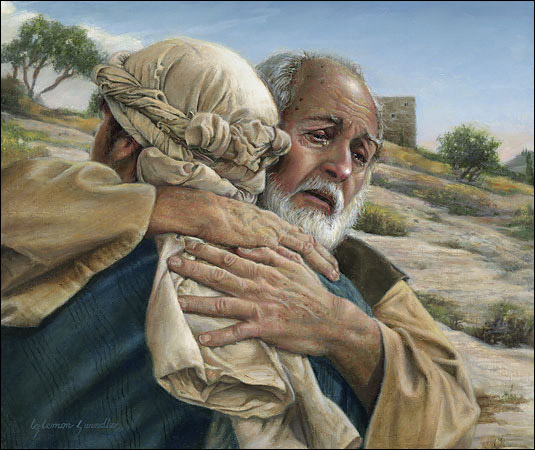
My pastor today, in his homily, explained that the story is a metaphor for God's forgiveness of us when we sin. Even if we fall by the wayside for a while and partake in sin, God is waiting for us and will welcome us home with open arms and forgive us for all we have done.
That's a really nice thought, to be sure. It's nice to know that there is Someone who can love so unconditionally and forgive us, no matter how bad our mistake, as long as we are truly sorry.
But then I think about it. What incentive does this story give for being a good person throughout life?
Think about it. People could live entirely sinful lives but sincerely apologize to God on their deathbeds and still be welcomed into heaven, just like the people who spent their whole lives being pious and faithful.
The Church teaches that we should be good people out of the goodness and generosity of our hearts. It also teaches that we should strive to be like Jesus and follow his example. However, living the life of a good person is not easy. Why go through the struggle of striving to be so good if there's no reward for it? Can't I just as easily go about life recklessly and just apologize on my deathbed and have the same reward?
I'm still struggling with this one.
I think people still choose to be 'good people' in order to make the world a better place. It's no fun to deal with a grouchy person or a person who is not in touch with the needs of others. Whether the eternal reward for being a good person is different from that of the person who chooses to be prodigal but repents in the last moments of life or not, the good doer has the benefit of knowing that he or she may have changed several lives by being a wonderful, giving, hardworking and loyal individual.
In addition, being a good person brings about a fullness of life that can't be replaced by sinful activities. Following God's commandments brings us closer to Him. The good people are able to have a wonderful relationship with God throughout their whole lives. This can replace the emptiness or internal yearning humans have in a way that other things cannot. That's the reward for being good -- we have God's friendship all life long plus eternity.
Even for the good people, this story's message of forgiveness can be relevant. Nobody is perfect. We all make mistakes at some point or another. However, it's easier to repent if we know that we have a God who loves us and will forgive us for our mistakes, if we are truly sorry, no matter how big or small the mistake.
You can read the Bible passage for yourself in Luke 15: 11-32.
What meaning do you take away from this parable?

